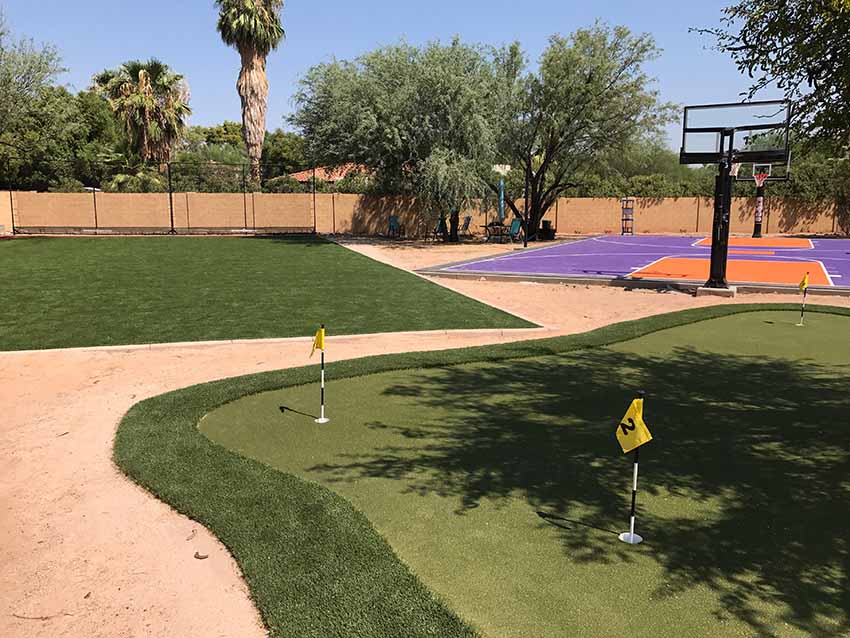
Where artificial grass around pool areas makes sense
Turf can work well in lounge areas, lawn replacements and planting-side borders near a pool. It adds a softer-looking surface without the mowing and irrigation needs of a natural lawn. That does not mean it should replace every hard surface: coping, equipment access and heavily used circulation routes deserve separate attention.
Start with how people actually move through the yard. Keep exits, gates and pool equipment accessible, and avoid layouts that force guests across narrow turf strips or awkward changes in elevation. Turf does not replace required pool barriers or other safety measures; check applicable local requirements before changing grades or surfaces near a fence or gate.
- Map the main route between the house, pool steps and seating.
- Keep turf edges and adjacent paving transitions even and secure.
- Preserve access to drains, equipment and service areas.
- Leave room to move chairs without repeatedly catching turf edges.
Plan drainage beneath the turf and beyond it
Water passing through turf backing is only one part of drainage. The underlying base, existing soil, finished elevations and available drainage outlets determine whether splash water and rainfall move away or collect beneath the surface. Covering a low spot with turf does not correct the low spot.
Arizona monsoon storms can send runoff from patios, roofs and surrounding ground into a poolside area. The installation plan should account for those incoming flows, not just pool splashing. Ask how water will reach an appropriate outlet without carrying dirty runoff into the pool, collecting against the house or creating a problem on neighboring property. Keep existing drains accessible, and handle pool backwash or draining separately under applicable local rules.
Design for summer heat, not just fall comfort
Artificial turf can become hot in direct Arizona sun. A comfortable barefoot test in late October does not establish how the same surface will feel on a summer afternoon. Pool water on your feet is not reliable protection from a hot surface, and selecting turf for Arizona conditions does not mean it stays cool.
Evaluate shade during the hours when the pool gets the most use. Shade structures and carefully placed seating can reduce direct sun exposure, but check the surface before children, pets or barefoot guests use it. A light rinse may cool turf temporarily; it uses water and should not be treated as a lasting heat solution. Wet turf can also be slippery, so avoid assuming that a grass-like texture makes it slip-proof.
Compare materials and installation details
Poolside turf needs to suit the setting as well as your preferred look. Ask to see samples alongside the coping and deck, and discuss exposure to routine pool splashes, cleaning products and direct sun. Get product-specific care guidance rather than assuming every turf product tolerates the same treatment. Avoid spilling concentrated pool chemicals on the surface.
Installation details matter at the edges. Discuss how seams, borders and transitions will be secured, how finished turf height will meet existing paving, and how the proposed infill and maintenance approach may affect debris near the pool. If turf is proposed over existing concrete, ask for a clear explanation of drainage and finished-height changes; covering the slab does not fix its slope or ponding.
Expect less lawn care, not zero maintenance
Artificial grass removes mowing from the poolside routine, but Arizona dust, leaves and windblown debris still need attention. Debris left on the surface can be tracked into the water or collect around drains. Use cleaning tools and methods recommended for the selected turf, and rinse when needed rather than treating daily watering as a requirement.
After a monsoon storm, check more than the visible grass blades. Look for sediment near drains, displaced material and changes at seams or edges. Address loose transitions or standing water rather than accepting them as normal features of a poolside installation.
- Remove leaves and debris before they accumulate.
- Keep drainage inlets and surrounding flow paths clear.
- Follow product guidance for brushing and spot cleaning.
- Inspect busy routes, seams and borders after storms or heavy use.
Budget for the site work as well as the turf
Artificial Grass Arizona's installed turf starts at $4.99 per square foot. Final pricing depends on site conditions, access, base preparation, drainage, turf grade and project details. Poolside projects deserve an on-site review because existing coping, narrow access and finished elevations can influence the scope. Compare proposals by their preparation and drainage plans, not simply the turf's appearance.
Based in Cave Creek, Artificial Grass Arizona serves 22 cities across the Phoenix metropolitan area. Its USA-made turf is selected and tested for Arizona's extreme heat, though it can still become hot in direct sun. The turf product carries a 15-year manufacturer warranty; installation labor carries a separate 2-year workmanship warranty. Financing is available. Book a free on-site estimate to review your poolside layout, drainage needs and project cost.
Quick answers.
- Is artificial grass comfortable for bare feet around an Arizona pool?
- It may feel comfortable in mild weather or shade, but it can become hot in direct sun. Plan for shade, check the surface before use and keep footwear available for hot conditions.
- Will artificial grass prevent puddles around my pool?
- Not by itself. Drainage depends on the turf backing, base, soil, finished slopes and a suitable outlet. Existing ponding needs to be addressed as part of the installation plan.
- Can chlorinated or saltwater pool splashes damage turf?
- Compatibility and care requirements vary by product. Ask for guidance for the turf you select, follow recommended cleaning instructions and keep concentrated pool chemicals off the surface.