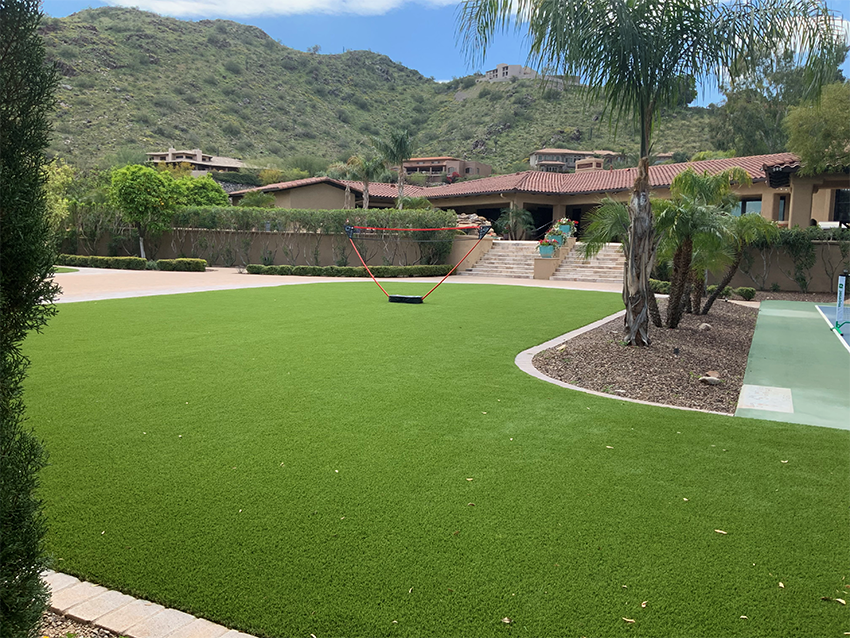
Choosing the pile for artificial grass for dogs
Pile height is the length of the turf blades. A shorter pile generally makes solid waste easier to spot and remove, while a taller pile can offer a fuller look and softer feel. The tradeoff is that longer blades can take more effort to separate, rinse and brush, especially where dogs repeatedly run or rest.
Height is only part of the decision. Blade density and how readily the pile stands back up also affect maintenance. Compare samples for feel, but ask to see how each option handles brushing and rinsing. For a frequently used potty area, prioritize access for cleaning over a lush appearance.
| Pile choice | Potential advantage | Tradeoff to consider |
|---|---|---|
| Shorter | Waste is generally easier to find and remove | May feel less plush |
| Moderate | Can balance appearance and cleaning access | Density still affects how easily debris rinses out |
| Taller | Fuller lawn appearance | Can require more brushing and careful waste removal |
Evaluate drainage from the surface to the outlet
Drainage is a system, not just a feature of the turf backing. Urine and rinse water must pass through the turf, move through the prepared base and have a suitable path away. A drainable backing cannot compensate for a poorly prepared base or a low spot that collects water.
Ask the installer to explain the proposed grading, base preparation and destination of runoff. Phoenix monsoon storms can reveal drainage problems that a light hose rinse does not. Downspouts, walls and nearby paving all affect where water goes, so identify existing puddles before installation.
Good drainage helps prevent lingering moisture, but it does not make urine disappear without cleaning. A small potty area used by several dogs needs a more deliberate rinsing routine than a large yard used occasionally.
Choose infill for the whole pet-use system
Infill sits between the blades and helps support the pile. Its suitability depends on the turf, installation design and how the yard will be used. Ask which material is proposed, why it fits a dog area and what maintenance it requires.
Some infills are marketed for odor control, but those claims should not replace a cleaning plan. Request written product information and use instructions rather than assuming a pet label means the surface cannot smell, become hot or require upkeep.
- Confirm that the proposed infill is compatible with the selected turf.
- Ask how the infill works with the planned drainage and rinsing routine.
- Review any handling or pet-access directions supplied with the product.
- Find out how brushing, cleaning and heavy use may affect infill distribution.
Build a cleaning routine before installation
Remove solid waste promptly and rinse away residue. Rinse frequently used urination spots regularly, adjusting the routine to the number of dogs, the size of the area and any developing odor. Artificial turf eliminates lawn irrigation, but a dog area still needs water for cleaning.
Arizona dust and fallen leaves add to the workload. Remove debris before it accumulates in the pile, and brush as directed for the turf system. Do not rely on monsoon rain to clean the yard: storms may move debris into corners and leave sheltered potty spots largely untouched.
For persistent urine odor, use a cleaner specifically labeled as compatible with artificial turf and follow both the cleaner and turf care instructions. Enzyme-based products may be an option, but application and contact-time directions matter. Never mix cleaning chemicals, and follow label directions for when pets can return.
- Keep waste bags, a hose and appropriate cleaning supplies close to the dog area.
- Give repeated potty spots extra attention rather than rinsing every area equally.
- Use brushing tools approved for the turf instead of aggressive rakes.
- Investigate recurring puddles or odor rather than covering the smell with fragrance.
Plan for heat, even during cooler months
Artificial turf can become hot in direct sun. Cooler late-October air does not guarantee a comfortable surface at midday, and summer use requires particular care. Check the surface before allowing dogs onto it, and keep them off turf that feels hot.
Include shade and an alternative place for dogs to rest or relieve themselves. Plan playtime around cooler parts of the day when necessary. Rinsing may cool the surface temporarily, but it is not a lasting heat-control strategy.
Artificial Grass Arizona uses USA-made turf selected and tested for Arizona’s extreme heat. That does not mean the turf stays cool. Choosing a suitable product and managing sun exposure are separate parts of a practical pet-yard plan.
Compare the installation plan, not just the sample
A useful proposal should identify the turf, infill, base preparation and drainage approach, along with care instructions. Show the estimator where your dogs run, dig and urinate, and point out hose access and shaded areas. Those details help make the yard easier to maintain.
Artificial Grass Arizona is based in Cave Creek and serves 22 cities across the Phoenix metropolitan area. Installed turf starts at $4.99 per square foot; final pricing depends on site conditions, access, base preparation, drainage, turf grade and project details. Financing is available.
The turf product carries a 15-year manufacturer warranty, while installation labor carries a separate 2-year workmanship warranty. Review the warranty documents alongside the proposal. To discuss a dog-friendly layout for your property, book a free on-site estimate.
Quick answers.
- What pile height is best for artificial grass for dogs?
- A shorter or moderate pile is often a practical starting point because waste is easier to reach and remove. Compare density, feel and brushing needs too; there is no single ideal height for every dog yard.
- Will artificial grass smell when dogs use it?
- It can if urine residue builds up. Effective drainage, regular rinsing and turf-compatible cleaning help manage odor. Infill marketed for odor control does not eliminate those maintenance needs.
- Can dogs use artificial turf during an Arizona summer?
- Only when surface conditions are comfortable. Turf can become hot in direct sun, so check it before use, provide shade and an alternative area, and move activity to cooler times when needed.