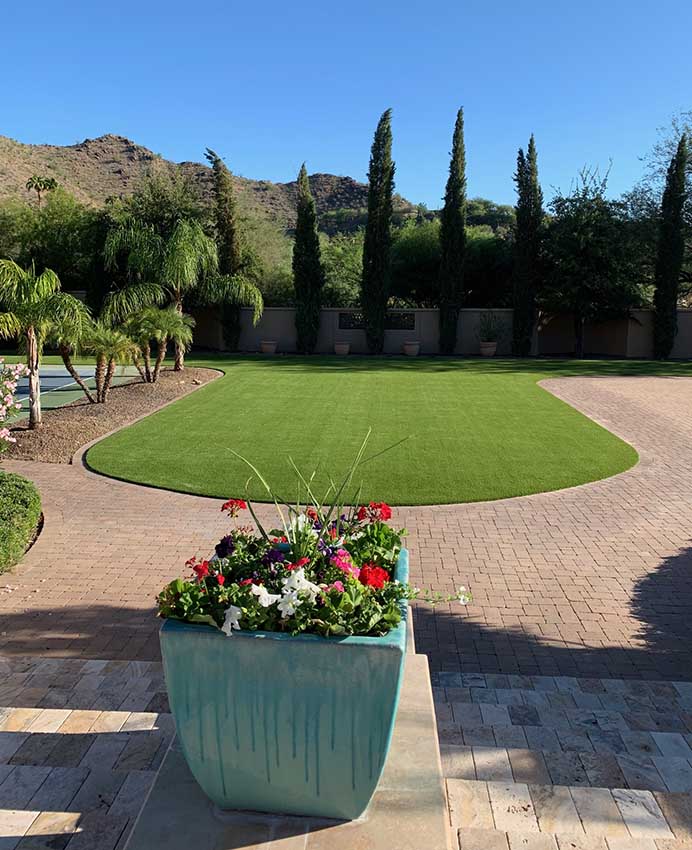
Why artificial grass gets hot in Arizona
Artificial turf absorbs energy from sunlight. Unlike living grass, it does not cool itself through the water movement and evaporation associated with plant growth. On a sunny Arizona day, the turf surface can be much hotter than the surrounding air. The forecast alone cannot tell you whether a lawn is comfortable to walk on.
Exposure matters as much as the product choice. A west-facing yard with little shade faces a different heat challenge than a courtyard shaded through much of the afternoon. Nearby paving, walls and reflected sunlight can also affect conditions, so evaluate the actual space rather than relying on a showroom sample or a general cooling claim.
Artificial Grass Arizona offers USA-made turf selected and tested for Arizona's extreme heat. That is not a promise of a cool surface: suitability for the climate and comfort underfoot are different questions.
Make shade part of the layout
If children or pets will use the lawn during summer, plan shade before deciding how much turf to install. Watch the yard at the hours you actually expect to use it. Morning shade may offer little help over a play area that receives full afternoon sun.
Covered patios, appropriately placed shade structures and established trees can reduce direct solar exposure. Their tradeoffs include cost, maintenance and changing shade patterns. A smaller, well-positioned turf area may serve your household better than a large lawn that is uncomfortable during its busiest hours.
- Place frequently used play and rest areas where shade falls during expected use.
- Provide pets with a shaded route to their relief area and access back indoors.
- Check for concentrated reflections from windows before choosing the turf location.
- Consider whether planned trees will provide useful shade now or only after years of growth.
Compare products without expecting heat-proof turf
Turf construction and infill choices can affect how a system behaves in the sun, but no product label replaces checking real conditions. If a supplier promotes a cooling feature, ask what it does, whether it requires water and what limitations apply in direct Arizona sunlight. Avoid treating “cooler” as equivalent to “cool.”
Ask to examine samples outdoors under similar exposure, rather than comparing one in shade with another in sun. A sample can help you understand texture and heat differences, but it cannot guarantee the temperature of the finished installation. Discuss the whole layout, including shade, surrounding hardscape and where people or animals will spend time.
Use timing, surface checks and rinsing realistically
Schedule play, exercise and pet visits for cooler parts of the day whenever possible, then check the surface before use. Shade and time of day are useful clues, not safety guarantees. If the turf feels hot, postpone activity or move to another area. Shoes can protect feet during ordinary walking, but they do not protect a crawling child's hands and knees or a pet's paws.
A brief rinse can lower surface temperature temporarily, but the turf can heat up again in direct sun. Rinsing uses water and is not a substitute for shade or supervision. Follow the turf supplier's care instructions and avoid leaving a hose running as a routine cooling strategy.
- Check the exposed areas people and pets will actually touch, not just a shaded edge.
- Do not use a brief hand check as proof that prolonged contact is safe.
- Keep children and pets away until a sun-heated hose has flushed and the water is cool.
- Recheck conditions after rinsing; do not assume the cooling effect will last.
- Give pets access to drinking water, shade and an indoor retreat.
Plan for dust, drainage and everyday use
Arizona dust and windblown debris make regular care part of turf ownership. Remove debris and clean the surface according to the supplier's instructions, but do not expect cleaning alone to solve solar heat. Before monsoon season, keep drainage routes clear and address recurring pooling rather than assuming the turf will handle every runoff condition.
During installation planning, discuss drainage and base preparation alongside heat exposure. These serve different purposes: drainage helps manage rain and cleaning water, while shade and use patterns help manage contact with a hot surface. Property managers should also make sure maintenance teams understand when shared play or pet areas need to be checked or temporarily avoided.
For a layout that accounts for your yard's sun exposure and intended use, book a free on-site estimate with Artificial Grass Arizona. Based in Cave Creek, the company serves 22 cities across the Phoenix metropolitan area.
Quick answers.
- Can artificial grass burn feet or paws?
- Yes. Turf exposed to strong sunlight can become hot enough to cause burns. Check conditions before use, avoid hot surfaces and provide a shaded alternative. A quick touch does not establish that extended contact is safe.
- Does watering artificial grass keep it cool?
- Rinsing can cool the surface temporarily, but direct sun can heat it again. It also uses water, so treat rinsing as a short-term measure rather than an all-day cooling solution.
- Will shade make artificial grass comfortable all summer?
- Shade reduces direct solar exposure and can improve comfort, but it does not guarantee a safe surface temperature. Shade moves, conditions change and exposed sections can remain hot, so check the area before use.