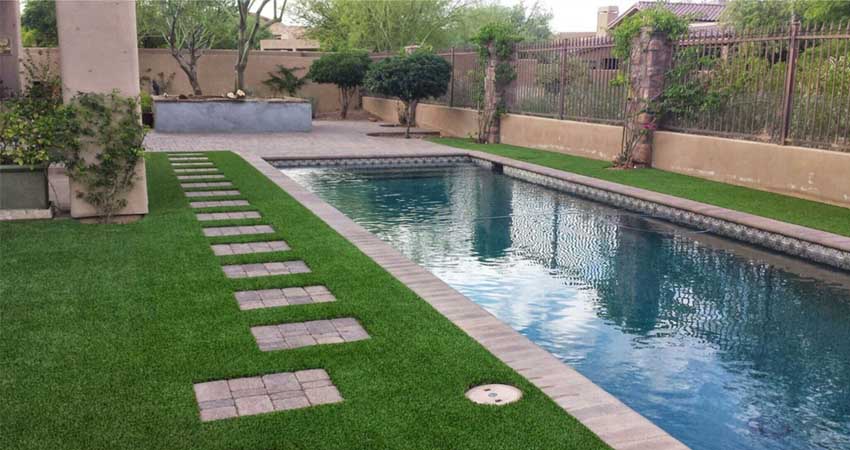
Artificial grass HOA planning starts with the site
Divide the property into use zones before choosing turf. An entrance monument landscape has different demands from a courtyard, pet area or narrow strip beside a busy sidewalk. Identify where people gather, where dogs repeatedly relieve themselves and where maintenance crews need access.
Consider whether turf is the right surface for every zone. A heavily used shortcut may be better served by a defined hardscape path, while a decorative lawn may be a good candidate for turf. Keep accessible routes, tree needs and existing irrigation for surrounding plants in the planning discussion.
- Map pedestrian shortcuts, gathering areas and recurring wear spots.
- Separate decorative areas from pet-use and active-use spaces.
- Identify shade patterns during summer, not only during November.
- Record puddling, erosion and runoff observed during past storms.
- Check access for installation equipment and ongoing maintenance.
Set approval criteria before comparing proposals
For HOA common areas, confirm who can authorize the work and what board, architectural or budget review is needed. For individually owned lots, review the applicable community documents and current Arizona requirements rather than assuming the same rules apply to every property. Commercial managers should also confirm owner approval and any applicable site requirements.
Give each installer the same project scope so proposals can be compared fairly. Request a written description of removal, base preparation, drainage approach, edge transitions and cleanup. Review turf samples at the property in sun and shade, and agree on appearance expectations before a large area is installed.
Plan installation around residents, tenants and visitors. Identify temporary pedestrian routes, delivery access and work-area boundaries. Clear communication about which areas will be unavailable is particularly important at occupied multifamily and retail properties.
Treat monsoon drainage as a design requirement
A turf surface cannot compensate for poor grading or an unsuitable base. Water must have a workable route through and away from the installation. Before construction, identify low spots, roof discharge points, existing drains and runoff entering from parking lots or neighboring landscape areas.
Ask the installer to explain how the proposed base and grading address those conditions without redirecting water toward buildings or creating problems on adjacent property. Keep existing drainage paths in the discussion; covering a problem area with turf does not resolve the underlying issue.
In November, dry weather can hide drainage trouble. Use maintenance records, storm photos and staff observations from the monsoon season to inform the design. Repeated flooding or complicated site drainage may warrant assessment by a qualified drainage professional.
Balance durability with Arizona heat
Artificial turf can become hot in direct sun. A comfortable surface on a mild November afternoon does not tell you how the same area will feel in summer. Evaluate shade and hours of use, especially where children, pets or people with bare skin may contact the surface. Check conditions before use and provide alternatives when the surface is too hot.
For durability, ask which turf options suit the expected traffic and what maintenance each requires. Concentrated traffic, turning movements and repeated pet use deserve more attention than total square footage alone. Edge transitions and seams also merit careful planning where people routinely cross between turf and pavement.
Artificial Grass Arizona offers USA-made turf selected and tested for Arizona’s extreme heat. That does not mean the turf stays cool or eliminates the need to manage wear. Match the product and installation plan to the actual use of the space.
Build an upkeep plan your team can follow
Artificial turf changes landscape maintenance; it does not eliminate it. Assign responsibility for debris removal, pet cleanup, surface inspections and any brushing or other care recommended for the selected product. Busy common areas need a schedule based on actual use rather than a residential maintenance assumption.
Arizona dust can accumulate between rains, and monsoon winds can leave debris across the surface. Use product-appropriate cleaning methods and account for water access where rinsing is needed. Pet areas require prompt waste removal and a cleaning plan; occasional rainfall is not a substitute.
| Condition | Maintenance response |
|---|---|
| Windblown dust and leaves | Remove debris and clean as needed using the product’s care instructions. |
| Repeated foot traffic | Check for flattened areas and follow recommended brushing practices. |
| Pet use | Remove solid waste promptly and follow an appropriate cleaning routine. |
| After a monsoon storm | Inspect drainage routes, sediment buildup, edges and transitions. |
| Lifted edges or uneven areas | Arrange prompt assessment and manage access if a trip concern develops. |
Budget for the whole project, not just the turf
Artificial Grass Arizona’s installed turf starts at $4.99 per square foot. Final pricing depends on site conditions, access, base preparation, drainage, turf grade and project details. For HOA and commercial budgets, compare complete scopes and include ongoing upkeep rather than treating the starting price as a final project estimate.
Keep the warranties distinct when reviewing proposals: the turf product carries a 15-year manufacturer warranty, while installation labor carries a separate 2-year workmanship warranty. Ask to review the written terms before approving the project; these are separate warranties, not a combined coverage period.
Based in Cave Creek, Artificial Grass Arizona serves 22 cities across the Phoenix metropolitan area, and financing is available. Book a free on-site estimate to review the property’s traffic, drainage and installation needs before setting the final scope.
Quick answers.
- Does an HOA need approval before installing artificial grass?
- Confirm the authorization process for the specific property. Common-area projects may involve board and budget review, while individual lots may have a separate architectural process. Review community documents and applicable Arizona requirements before proceeding.
- Can artificial grass handle busy commercial areas?
- It can be an option when the turf, base and maintenance plan match the expected use. Concentrated traffic needs particular attention, and heavily traveled shortcuts may be better served by hardscape.
- Is November a good time to plan an Arizona turf project?
- November’s milder weather makes site evaluation practical, but assess summer shade and heat exposure too. Use records from previous monsoon storms to identify drainage issues that may not be visible during dry weather.