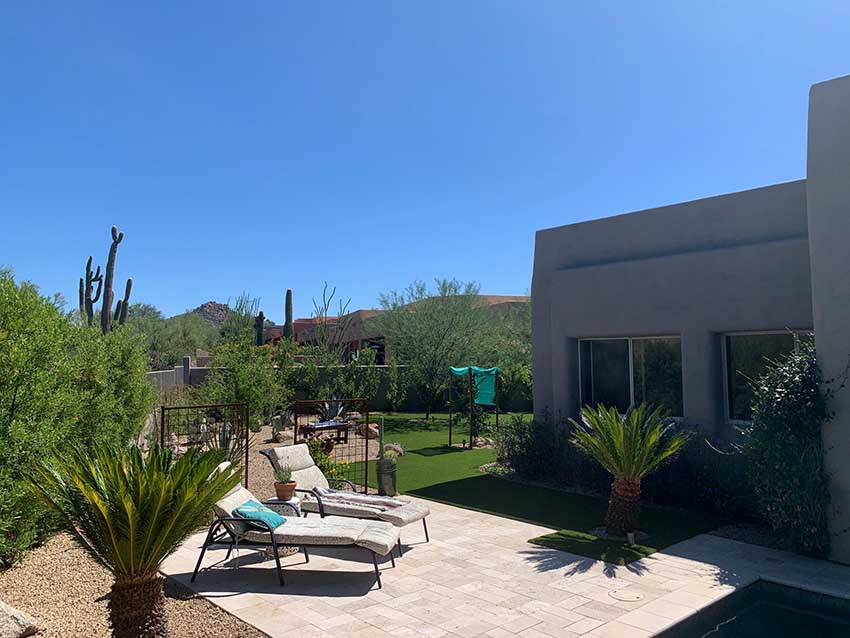
Artificial grass maintenance in Arizona: start with the basics
Walk your turf regularly and look for leaves, pet waste, flattened traffic paths, lifting edges and places where water collects. Pay extra attention around gates, downspouts, patio edges and pet areas. Catching a change early makes it easier to decide whether the surface needs cleaning or the installation needs professional attention.
Keep the turf manufacturer's care instructions handy. Use tools and cleaning products compatible with your particular turf, and ask your installer before adding infill or treating a stubborn stain. A flexible, nonmetal rake or suitable synthetic-bristle brush is generally a better starting point than sharp tools or aggressive scrubbing.
Spring checklist: clear buildup before the hottest weather
Spring is a useful time to remove accumulated leaves, seed pods and windblown dust. Debris can settle between the blades, especially beneath trees and along walls. Clear loose material before rinsing so you do not simply wash it deeper into the surface.
Brush flattened areas gently against the direction the blades lean, following the product's care instructions. If a traffic lane remains compressed, or the infill appears uneven, ask the installer about the appropriate correction rather than adding material by guesswork.
- Pick up branches and larger debris by hand; remove smaller debris with a turf-compatible rake or blower used gently.
- Rinse dusty areas as needed, using only enough water to carry away surface dirt.
- Check seams and perimeter edges for visible changes without pulling or lifting them.
- Clear accessible drain openings and remove debris where water leaves the turf.
Summer checklist: manage heat and pet use
Artificial turf can become hot in direct Arizona sun. Schedule brushing and cleaning for cooler hours, and assess the surface before children or pets use it. Shade can reduce direct exposure; rinsing may cool the surface temporarily, but it is not a lasting heat solution. Keep people and pets off turf that feels too hot.
Remove solid pet waste promptly and rinse urine areas regularly, adjusting attention to how heavily the space is used. If odors persist, use a turf-compatible cleaner according to its label and the manufacturer's instructions. Avoid mixing cleaners, and do not assume a stronger chemical will solve an underlying drainage problem.
Focus water use where it is needed rather than watering the entire lawn on a fixed schedule. Dusty corners and frequently used pet spots may need attention while the rest of the yard does not.
Monsoon checklist: inspect before and after storms
Monsoon winds can load turf with branches, grit and landscape debris. Before a storm, clear drainage routes and secure movable yard items. Turf drainage depends on the whole installation, including the base, grading and a usable path for water to leave—not just the turf surface.
After the storm has passed and conditions are safe, inspect the yard before brushing or rinsing. Persistent puddles, displaced material or new low spots deserve attention. Surface cleaning alone will not correct a grading or base problem.
- Remove storm debris without dragging sharp branches across the turf.
- Look for sediment washed in from planting beds, slopes or adjoining pavement.
- Check for newly lifted edges, separated seams or uneven areas.
- Photograph recurring puddles and note where runoff enters and exits before contacting your installer.
Fall and winter checklist: reset your routine
As temperatures ease, remove seasonal leaf litter before it forms a damp layer. Brush high-use areas as needed and inspect the perimeter after moving furniture or holiday decorations. Avoid stakes through the turf and keep grills, fire pits and other heat sources away from it.
Cooler weather does not eliminate pet cleanup or drainage checks. For shared properties, assign responsibility for waste pickup, debris removal and reporting damage. A simple maintenance log helps distinguish a recurring problem from a one-time mess.
If seasonal checks have you planning a new lawn or replacement, book a free on-site estimate with Artificial Grass Arizona. Based in Cave Creek and serving 22 Phoenix-area cities, the team can assess site conditions, access and drainage needs.
Quick answers.
- How often should I rinse artificial grass in Arizona?
- Rinse according to dust buildup, pet use and the turf manufacturer's instructions—not a fixed watering schedule. Frequently used pet areas usually need more attention than lightly used parts of the lawn.
- Can I pressure wash artificial turf?
- Do not assume pressure washing is suitable. Forceful cleaning can disturb infill or stress seams and edges. Start with gentle cleaning and check your manufacturer's instructions before using a pressure washer.
- What should I do if water pools after a monsoon storm?
- Once conditions are safe, clear loose surface debris and accessible drain openings. If pooling persists or recurs, document it and contact your installer to assess the drainage, grading and base.