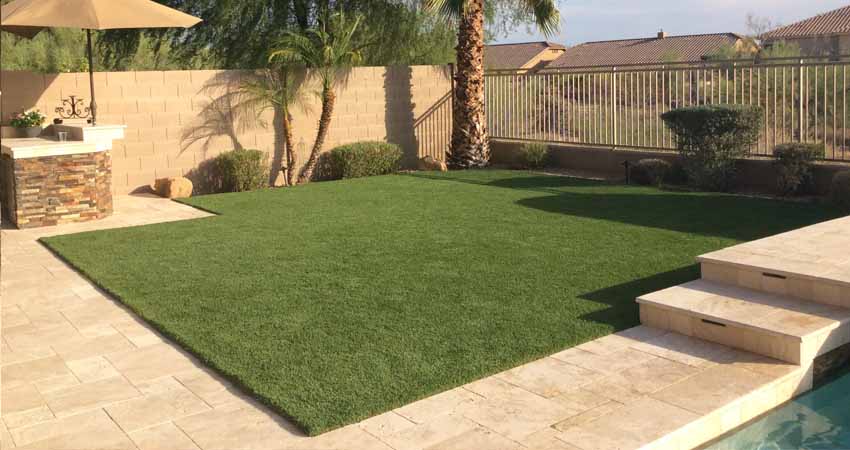
Start artificial grass monsoon preparation with a fall review
Look back at where water collected during summer storms. Check low areas, transitions between turf and patios, and places where roof runoff or neighboring slopes send water toward the lawn. Photos taken during past storms can help an installer understand problems that are no longer visible on a dry day.
Walk the yard now and look for sediment deposits, uneven areas, lifted edges or separating seams. These are reasons to investigate, not proof that the turf needs replacement. Surface debris, blocked outlets and problems beneath the turf require different solutions.
Clear dust and debris without damaging the surface
Windblown leaves, twigs and landscape debris can collect along turf borders and over nearby drain grates. Remove them before they become a wet mat. Use tools and cleaning methods approved for your turf; aggressive scraping or unsuitable equipment can damage fibers or disturb infill.
Arizona dust does not always require a full-yard rinse. Remove loose debris first, then use a light rinse where needed if water can drain freely. Avoid washing piles of dirt into the turf or pushing sediment into storm drains.
- Pick up branches and larger debris by hand.
- Use a turf-compatible broom or rake for routine surface cleanup.
- Keep nearby drain grates and accessible outlet openings free of leaves.
- Check borders beside gravel and planting beds for accumulated soil.
Check the whole drainage path—not just the turf
Water must pass through the turf system and reach a suitable drainage route. The base, soil conditions, grading and outlet locations all affect performance. A turf product’s drainage capability alone does not establish how an installed yard will handle a monsoon downpour.
If you already need to rinse a small area, watch where that water travels. This can reveal an obvious blockage or low spot, but it cannot reproduce an intense storm. Recurring ponding, water moving toward the house or sediment washing from beneath an edge warrants a professional assessment. Do not cut drainage holes, lift seams or excavate the base as a quick fix.
Prepare the surrounding yard before storms return
Much of what lands on artificial grass during a storm comes from elsewhere in the yard. Loose furniture, unsecured shade structures and soil from adjacent beds can create cleanup and repair problems. Address those sources while conditions are calm, rather than working outside as wind and lightning approach.
Shade can help reduce sun exposure, but temporary umbrellas and canopies need an appropriate storm plan. Artificial grass can become hot in direct Arizona sun; leaving an unsecured shade structure in place is not a safe solution to that tradeoff.
- Secure or store lightweight furniture, toys and temporary shade items.
- Check nearby trees for damaged limbs and use a qualified professional when needed.
- Keep roof drainage routes and yard outlets clear without redirecting water onto neighboring property.
- Have loose turf edges or open seams evaluated before strong winds arrive.
- Address soil spilling from adjacent beds without creating a barrier across a drainage route.
Inspect carefully after a monsoon storm
Wait until lightning and dangerous winds have passed before inspecting the yard. Keep people and pets away from standing water, exposed electrical equipment and damaged trees. Do not assume stormwater on the turf is clean, especially if it arrived from a street or another property.
Once access is safe, photograph new pooling, exposed base material, shifted borders or seam changes before cleanup. Remove ordinary loose debris gently, and avoid heavy traffic on areas that feel soft or unstable. If runoff may contain sewage, chemicals or other contaminants, keep the area out of use and seek appropriate cleanup guidance rather than simply rinsing it.
Use the cooler months to plan lasting improvements
Repeated drainage trouble deserves more than another surface cleaning. Ask an installer to assess where runoff enters, whether the base and grading are suitable, and where water can leave the area. Adding infill or replacing turf alone may not correct an underlying drainage problem.
For a new installation or replacement, discuss monsoon runoff during the site assessment—not after the turf is selected. Artificial Grass Arizona is based in Cave Creek and serves 22 cities across the Phoenix metropolitan area. Book a free on-site estimate to discuss your site conditions and project needs.
Quick answers.
- Is November too late to prepare artificial grass for monsoons?
- No. Late November is a useful time to document summer drainage problems, clear accumulated debris and plan improvements before next summer’s storms.
- Will artificial grass prevent puddles during heavy rain?
- Not necessarily. Ponding depends on the complete installation, including the base, grading, soil and drainage outlets, as well as rainfall intensity and incoming runoff.
- Should I pressure-wash artificial grass after a dust storm?
- Do not default to pressure washing. Remove loose debris first and follow the turf manufacturer’s cleaning instructions. A light rinse may be enough for residual dust when drainage is working.