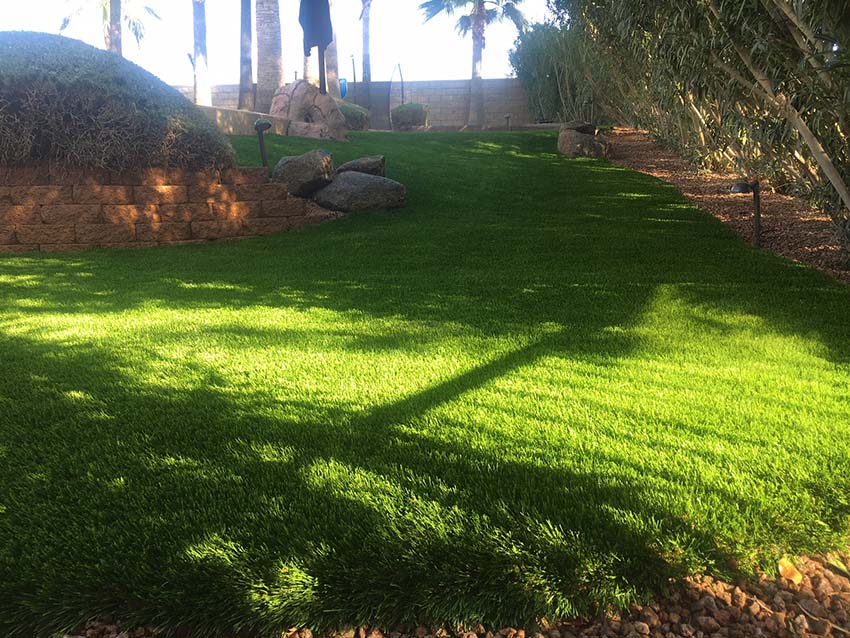
Artificial grass vs natural grass: start with how you use the yard
Natural grass is a living landscape that needs irrigation and ongoing care. Artificial grass replaces that growing system with a manufactured surface and a prepared base. It removes mowing and routine lawn irrigation, but it does not remove cleaning, drainage planning or eventual replacement.
For Arizona homeowners and property managers, the useful question is not simply which option looks better. It is whether the area needs to support barefoot play, pets, frequent gatherings or mostly provide a consistent appearance. Those uses can point toward different choices—even within the same property.
- For barefoot play, weigh summer surface temperature and shade heavily.
- For pet areas, plan for waste pickup, rinsing and drainage with either surface.
- For appearance-focused areas, compare routine lawn care with turf cleaning and eventual replacement.
- For a mixed-use yard, consider limiting lawn space to areas where people actually use it.
Water: less irrigation does not mean no water use
Natural grass needs irrigation to remain actively growing through Arizona’s hot, dry weather. Its water demand depends on the grass, soil, sun exposure, season and irrigation management. Leaks, poor sprinkler coverage and watering pavement can add waste without improving the lawn.
Artificial grass does not need water to grow, so replacing an irrigated lawn removes that irrigation demand. Water may still be needed to rinse dust, clean pet areas or temporarily cool the surface. Cooling by rinsing is short-lived in direct sun, so it should not be treated as a permanent solution to summer heat.
When comparing savings, use your own irrigation schedule and water bills rather than a generic promise. A heavily watered lawn presents a different opportunity from a small, efficiently irrigated patch—or an area that currently has no grass.
Upkeep: artificial turf changes the work
Natural grass typically needs mowing, edging, irrigation checks and seasonal attention to weeds, nutrition and worn areas. Arizona warm-season lawns can lose their green color during cooler weather. Overseeding for winter color adds another round of preparation, watering and mowing.
Artificial grass avoids mowing and overseeding, but desert dust, windblown debris and pet waste still need attention. Leaves and debris should be removed, spills addressed and pet areas cleaned regularly. Grooming may also be needed where repeated traffic flattens the blades; follow the product’s care instructions rather than assuming every cleaning method is suitable.
- Natural grass: budget time for growth management and irrigation maintenance.
- Artificial grass: budget time for debris removal, cleaning and periodic grooming.
- Pet areas: judge the choice by your cleaning routine, not appearance alone.
- Managed properties: compare actual maintenance tasks and service bids, not just mowing costs.
Heat: a major tradeoff in Arizona
Artificial grass can become hot in direct sun. A product selected for Arizona conditions should not be confused with a surface that stays cool. Healthy, irrigated natural grass generally provides a cooler surface through evaporation and plant transpiration, although maintaining that benefit requires water and care.
Shade, exposure and time of day should influence your layout. Check surface conditions before children or pets use the area, and do not assume turf is comfortable for bare feet or paws because it looks inviting. If midday summer use is a priority, make shade and alternative usable areas part of the design.
Artificial Grass Arizona offers USA-made turf selected and tested for Arizona’s extreme heat. That product selection does not eliminate the need to plan around hot surface temperatures.
Monsoon drainage depends on what is underneath
Neither natural grass nor artificial turf automatically fixes a drainage problem. Compacted soil, low spots and runoff from surrounding hardscape can cause standing water in either yard. Arizona’s intense monsoon storms make it important to understand where water enters the property and where it can safely go.
For artificial grass, drainage depends on the entire installation: the turf, prepared base, grading and underlying site conditions. A surface designed to let water pass through still needs somewhere for that water to go. Natural lawns also need suitable grading and soil conditions; vegetation alone cannot overcome a poorly draining site.
Before choosing a surface, identify existing puddles, erosion and runoff toward buildings. Address those conditions in the project scope rather than expecting a new lawn surface to conceal or solve them.
Long-term value: compare the full ownership costs
Artificial turf usually concentrates more of the investment at installation, while natural grass carries continuing costs for water and lawn care. Neither option has a universal payback period. Compare the same area and time horizon, including your actual water costs, maintenance needs and likely repairs or replacement.
Artificial Grass Arizona’s installed turf starts at $4.99 per square foot. Final pricing depends on site conditions, access, base preparation, drainage, turf grade and project details. The turf product carries a 15-year manufacturer warranty; installation labor carries a separate 2-year workmanship warranty. These are distinct warranties, not a combined coverage period or a promise of service life.
Natural grass can regrow or be repaired in worn spots, while artificial turf may eventually need sections repaired or the surface replaced. Artificial turf also introduces manufactured materials that require end-of-life disposal planning; natural grass requires ongoing water and may involve fertilizers or other lawn treatments. For a site-specific comparison, book a free on-site estimate with Artificial Grass Arizona, based in Cave Creek and serving 22 cities across the Phoenix metropolitan area.
| Ownership factor | Natural grass | Artificial grass |
|---|---|---|
| Water | Regular irrigation during active growth | Water for cleaning and occasional rinsing |
| Routine work | Mowing, edging and lawn care | Debris removal, cleaning and grooming |
| Summer comfort | Generally cooler when healthy and irrigated | Can become hot in direct sun |
| Long-term renewal | Regrowth, patching or lawn renovation | Repairs and eventual surface replacement |
Quick answers.
- Does artificial grass save water in Arizona?
- Replacing an irrigated lawn removes the need to water grass for growth. Artificial turf may still need water for cleaning and rinsing, so savings depend on the lawn being replaced and how the new area is used.
- Is artificial grass cooler than natural grass?
- Generally, no. Healthy, irrigated natural grass is usually cooler. Artificial grass can become hot in direct sun, and rinsing provides only temporary cooling.
- Is artificial grass cheaper over the long term?
- It can be, but there is no universal break-even point. Compare installation, water, maintenance, repairs and eventual replacement using your property’s conditions and actual costs.