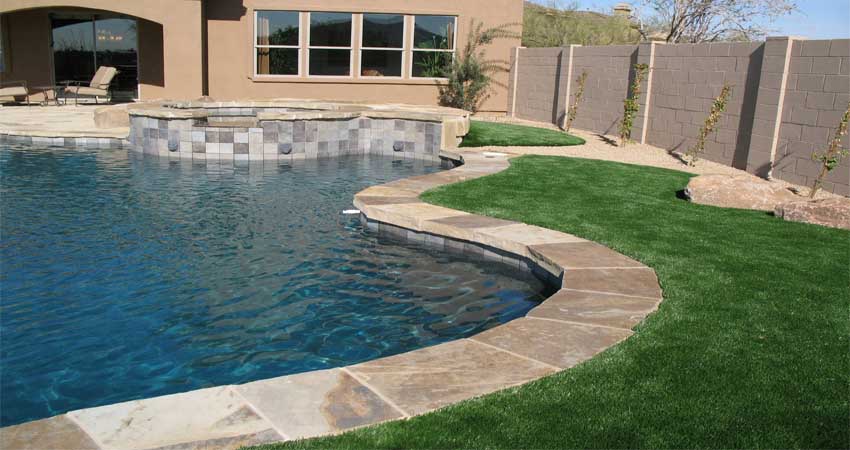
Where artificial grass water savings begin
Natural grass needs irrigation to remain healthy in the Phoenix area's dry climate. Artificial turf does not need irrigation to grow, so replacing an actively watered lawn can remove that area's routine lawn-watering demand. The reduction depends on how much grass you replace, how it was watered and whether its irrigation can be shut off independently.
In mid-November, some local lawns have been overseeded with winter ryegrass, while others are moving into their dormant season. An overseeded lawn continues to need water through the cooler months. A lawn that is not overseeded has a different watering pattern, so one autumn water bill is not a reliable measure of potential annual savings.
Replacing gravel, bare ground or an established low-water planting area offers a different result: there may be little existing irrigation to eliminate. Choose turf there for its intended use or appearance, not on the assumption that it will reduce water consumption.
Compare lawn areas before choosing what to replace
Evaluate individual landscape areas rather than treating the whole property as one project. An irrigated patch that is difficult to water evenly may be a better candidate than a low-water garden. Retaining a smaller natural lawn and replacing another section can also be a practical compromise.
Water savings are only one consideration. A surface used by children or pets needs a heat-management plan, while a courtyard or common area needs a drainage and cleaning plan.
| Landscape area | Water-saving opportunity | Main consideration |
|---|---|---|
| Regularly irrigated front lawn | Eliminates routine watering of the replaced lawn | Decide whether a lawn-like surface or low-water planting better fits the space |
| Narrow or awkward lawn strip | Removes lawn irrigation where sprinkler coverage may be difficult | Separate any irrigation that also serves nearby plants |
| Backyard play or pet lawn | Reduces routine lawn irrigation | Allow for hot surfaces and water used for cleaning |
| Existing gravel or low-water planting | Little lawn-water demand exists to remove | Do not assume adding turf produces water savings |
Keep tree and planting water separate
Removing lawn irrigation does not remove the water needs of the rest of the landscape. Trees and shrubs may have been receiving water from lawn sprinklers, including water beyond their immediate planting areas. Before shutting down a lawn zone, identify which plants depend on it and plan an appropriate separate watering method.
Have the irrigation layout checked during project planning. Shared zones may need modification so the former lawn stops receiving water while retained plants continue to receive suitable irrigation. Avoid leaving sprinklers operating over artificial turf simply because another part of the zone still needs them.
Established trees deserve particular attention. Seek qualified landscape or arborist advice before changing irrigation or disturbing soil around their roots. Turf replacement should not trade lower lawn water use for stressed shade trees.
Account for heat, dust and monsoon drainage
Artificial turf can become hot in direct Arizona sun. November's milder afternoons are not a good test of how a west-facing yard will feel in summer. Consider shade, intended use and alternative surfaces before selecting turf for play areas or pet runs. Rinsing may cool the surface temporarily, but it uses water and does not keep turf cool throughout the day.
Dust, debris and pet use also affect maintenance. Some debris can be removed without water, while rinsing or cleaning may still be necessary. A frequently used pet area can have different cleaning needs from a decorative front-yard patch, so neither should be described as a zero-water landscape.
Monsoon storms make base preparation, grading and a clear drainage path important even when routine irrigation is eliminated. Ask how runoff will move through and away from the installation without collecting against buildings or creating problems elsewhere on the property.
Estimate the reduction for your property
Start with a full year's water-use history and your irrigation schedule. A household bill includes indoor use and other outdoor uses, so it cannot by itself show exactly how much water the lawn consumes. An irrigation assessment can help distinguish lawn demand from tree watering, pool use, leaks and other sources.
Compare the existing lawn's irrigation with the proposed landscape's remaining needs, including plant irrigation and turf cleaning. Installed turf from Artificial Grass Arizona starts at $4.99 per square foot; final pricing depends on site conditions, access, base preparation, drainage, turf grade and project details. Do not assume water-bill savings alone will recover the installation cost within a particular period.
- Measure the irrigated lawn area you would actually replace.
- Identify dedicated lawn zones and any shared plant irrigation.
- Review seasonal watering, including winter overseeding.
- Account for cleaning water and retained landscape irrigation.
Choose a landscape that fits the site
The most useful plan may combine artificial turf where a lawn-like surface serves a purpose, suitable low-water planting elsewhere and separate irrigation for trees. That approach focuses the investment on usable space rather than covering every open area with turf.
Artificial Grass Arizona is based in Cave Creek and serves 22 cities across the Phoenix metropolitan area. Book a free on-site estimate to discuss which lawn areas are worth replacing and how irrigation, shade and drainage should factor into the project.
Quick answers.
- How much water can artificial grass save?
- It can eliminate routine irrigation for the natural lawn it replaces. The property's net reduction depends on existing watering habits, the area replaced, retained plant irrigation and water used to clean the turf.
- Does artificial grass need any water in Arizona?
- It does not need watering to grow, but occasional rinsing or cleaning may use water, particularly in pet areas. It can also become hot in direct sun; rinsing offers only temporary cooling.
- Will replacing gravel with artificial grass reduce water use?
- Usually there is little or no routine irrigation to eliminate from a gravel area. Adding turf there is primarily a use or appearance decision, and cleaning it may introduce some water use.