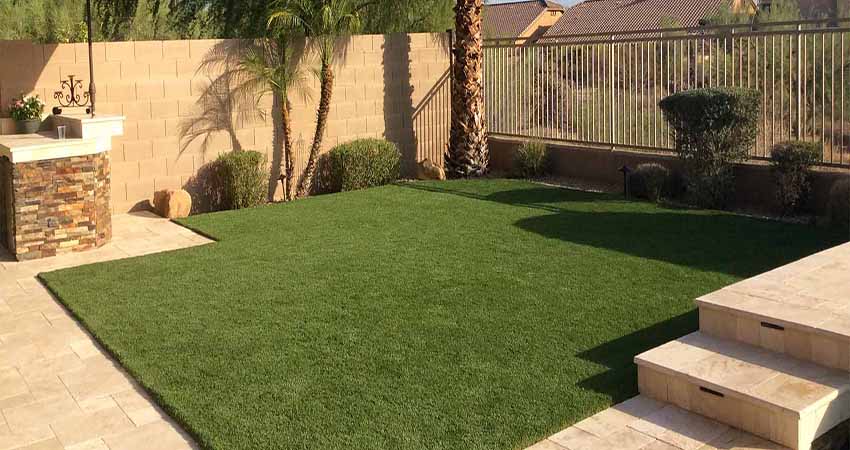
Artificial grass winter care in Arizona starts with debris control
Synthetic turf does not need winter overseeding, fertilizer or mowing. It still needs attention when leaves, seedpods and windblown dust collect. Clear debris before foot traffic works it deeper into the turf, especially beneath trees and along walls where wind leaves piles.
Use a plastic leaf rake, a soft broom or a blower used gently to gather loose material. Follow your turf manufacturer’s maintenance instructions when choosing tools and brushing the fibers. Avoid aggressive scraping or blowing that moves infill.
- Check shaded corners, fence lines and tree edges for trapped leaves.
- Pick up twigs and larger debris before brushing.
- Brush flattened traffic lanes gently with a turf-appropriate, nonmetal brush.
- Rinse dust only when needed rather than running irrigation on a lawn schedule.
Use winter rain to check drainage
Phoenix winters can include dry stretches interrupted by rain. After rainfall, look for standing water, sediment buildup and runoff entering the turf from adjacent gravel or bare soil. Debris left by summer monsoons may still be lodged around low spots or nearby drain inlets.
Clear accessible surface debris without disturbing the base or digging into drainage components. If water repeatedly collects in the same place or drains noticeably more slowly than elsewhere, photograph the area and ask your installer to assess it. Brushing the surface will not resolve every grading or drainage problem.
- Keep nearby drain grates and surface runoff paths clear.
- Check transitions between turf, patios and planting beds for collected silt.
- Look for soil washing onto the turf from neighboring landscape areas.
- Note where water collects and how it changes after the rain stops.
Let frost thaw before using the yard
Cold nights can bring frost to parts of the Phoenix metro area, particularly exposed yards and colder outlying locations. If the turf feels stiff or has visible frost, postpone brushing, vigorous play and moving heavy furniture until it thaws naturally. Take care on adjoining patios and walkways, which may also be slippery.
Do not chip ice off the fibers or apply deicing chemicals without checking the manufacturer’s instructions. Avoid rinsing immediately before freezing conditions are expected. Winter sunshine can still warm the surface, and artificial turf can become hot in direct sun; check it before children or pets settle down to play.
Keep pet cleanup consistent in cooler weather
Cooler temperatures do not eliminate pet waste or residue. Remove solid waste promptly and rinse affected spots as needed, allowing water to drain. Rain may help wash the surface, but it should not replace targeted cleanup in a regularly used pet area.
For lingering odors, use a cleaner labeled as suitable for artificial turf and follow both its directions and the turf manufacturer’s guidance. Do not assume every household disinfectant is compatible. Choose a time when the area can drain and dry, rather than leaving it wet ahead of a freezing night.
Inspect edges and plan around winter activities
Before setting out holiday decorations or hosting outdoor gatherings, check for lifted edges, visible seam separation and uneven spots. Avoid driving decoration stakes through the turf. Keep grills, fire pits and other heat sources off the synthetic surface, and follow equipment clearance instructions.
After moving furniture or taking down decorations, remove debris and gently brush flattened areas according to the care instructions. Leave loose edges or seam problems for professional assessment rather than trying improvised adhesives or fasteners.
If winter plans include replacing an existing lawn or installing a new turf area, book a free on-site estimate with Artificial Grass Arizona. Based in Cave Creek, the company serves 22 cities across the Phoenix metropolitan area.
Quick answers.
- Should I water artificial grass during an Arizona winter?
- Not to keep it growing. Rinse only as needed for dust, spills or pet cleanup, and let it drain. Avoid adding water when freezing conditions are expected.
- Can I walk on artificial grass when it is frosty?
- Wait for visible frost to thaw when practical, particularly before heavy use, play or brushing. Use caution around icy turf edges and adjacent hard surfaces.
- Does artificial grass need winter fertilizer or overseeding?
- No. Synthetic turf needs neither. Winter maintenance focuses on debris removal, appropriate cleaning, drainage checks and watching for surface or edge problems.