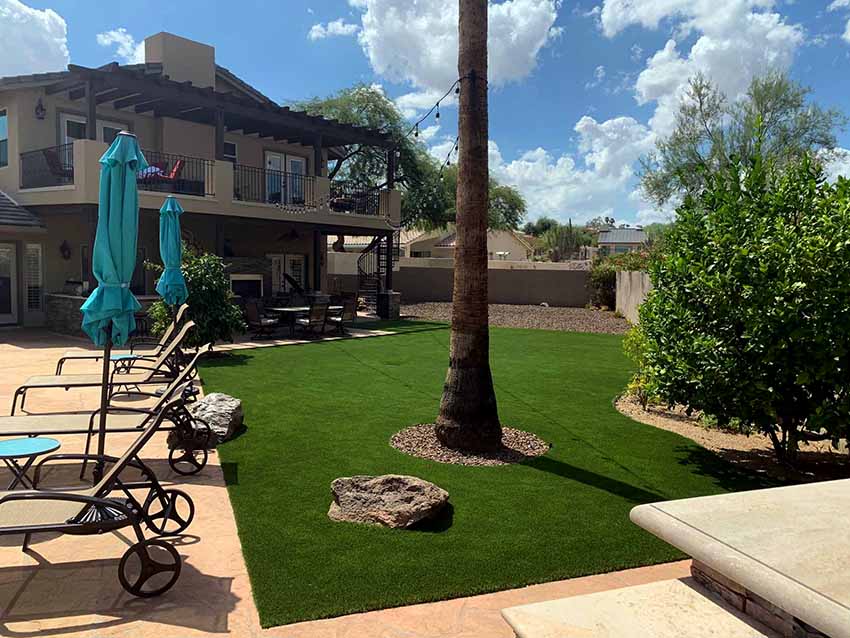
The best artificial grass for Arizona starts with sun exposure
Map where your yard receives direct sun, especially during the afternoon. Artificial turf can become hot in direct sunlight, even when it is selected for desert conditions. Heat suitability does not mean a surface will stay comfortable for bare feet or paws.
Compare samples outdoors in the places you plan to install turf. An October sample check can help you judge color and texture, but it cannot establish how the surface will feel during peak summer heat. Ask how the product was evaluated for Arizona conditions rather than relying on a cooling label alone.
For play spaces and pet areas, plan shade and access to an alternative surface. Check turf temperature before use, and keep children and animals off it when it feels too hot. A brief rinse may cool the surface temporarily, but it uses water and is not a lasting substitute for shade.
Match the turf to actual foot traffic
A front-yard display lawn and a frequently used backyard have different priorities. Taller, softer-looking turf may create a lush appearance, while a shorter, more upright surface may be easier to keep looking orderly in busy areas. Height alone does not determine durability; blade construction, density and maintenance also matter.
Tell the installer where people enter the yard, where dogs run and where furniture will sit. Concentrated traffic can flatten blades and leave visible routes. Occasional brushing can help restore their position, but turf should not be treated as maintenance-free.
- For decorative front yards, prioritize a convincing color and texture from the street.
- For active yards, compare how samples respond when pressed and brushed.
- For narrow side yards, discuss repeated foot traffic and the path used for maintenance access.
- For frequent gathering areas, consider whether paving is better suited to furniture and concentrated wear.
For pets, evaluate the whole drainage and cleaning system
Pet-friendly turf is more than a label on the grass. Liquid must pass through the turf and move through a properly prepared base toward an appropriate drainage destination. Ask the installer to explain that route, particularly in enclosed side yards or areas with existing puddles.
Pick up solid waste promptly and rinse pet-use areas as needed. Urine residue can contribute to odors, especially in warm weather. Choose cleaning products compatible with the turf system and follow the manufacturer’s care directions; do not assume the lawn will remain odor-free without attention.
Show the estimator your dog’s usual bathroom area and running route. A dedicated pet zone can make cleanup more manageable, but it still needs drainage, a practical water source and shade or another place for pets to go when the turf is hot.
Choose curb appeal in Arizona light, not showroom light
View larger samples beside your stucco, paving, gravel and existing plants. A color that looks appealing indoors may appear overly bright in strong desert sunlight. Compare blade tones and texture at both close range and from the sidewalk.
Ask how blade direction and seams will be arranged. Turf can look lighter or darker depending on the viewing angle, so layout matters as much as the sample you select. Clean transitions to walkways and planting beds also help the finished yard look intentional.
Think about dust and debris as part of appearance. Turf beneath trees will need leaf removal, and dusty areas may benefit from occasional rinsing. Leaving suitable planting space around trees and shrubs preserves access for irrigation and landscape care.
Give base preparation and monsoon drainage equal attention
Even attractive turf can disappoint over a poorly prepared site. Existing soil, grading, compaction and drainage all influence how the finished surface performs. Turf that allows water through cannot compensate for a base or yard layout that leaves water trapped underneath.
Fall is a useful time to review where runoff traveled during the recent monsoon season. Share photos of puddles, washed-out gravel or water collecting near the house. The installation plan should address those site conditions rather than simply cover them.
- Identify existing low spots and where stormwater currently exits the area.
- Ask what removal, grading and base preparation the proposal includes.
- Confirm how transitions at patios, gates and walkways will be handled.
- Discuss access to drains, irrigation components and utilities after installation.
Compare complete proposals, not just turf prices
Installed turf from Artificial Grass Arizona starts at $4.99 per square foot. Final pricing depends on site conditions, access, base preparation, drainage, turf grade and project details. Compare written proposals for the full scope of work rather than assuming the lowest square-foot figure represents the same installation.
Based in Cave Creek and serving 22 cities across the Phoenix metropolitan area, Artificial Grass Arizona offers USA-made turf selected and tested for Arizona’s extreme heat. The turf product carries a 15-year manufacturer warranty. Installation labor carries a separate 2-year workmanship warranty. These are distinct warranties, not a combined coverage term; review the written terms before choosing.
Book a free on-site estimate to compare options against your yard’s sun, traffic, pet use and drainage needs. Financing is available.
Quick answers.
- Does artificial grass stay cool in Arizona summers?
- No. Artificial turf can become hot in direct sun. Plan shade, check the surface before children or pets use it, and provide an alternative area when it is too hot.
- Is taller artificial grass always better?
- No. Taller turf can look lush, but height alone does not establish quality or durability. Compare blade construction, density, appearance and care needs against your yard’s traffic.
- Can artificial grass fix a yard that already floods?
- Not by itself. Existing drainage problems need evaluation before installation. Water must move through the turf and base to an appropriate outlet without creating new pooling problems.