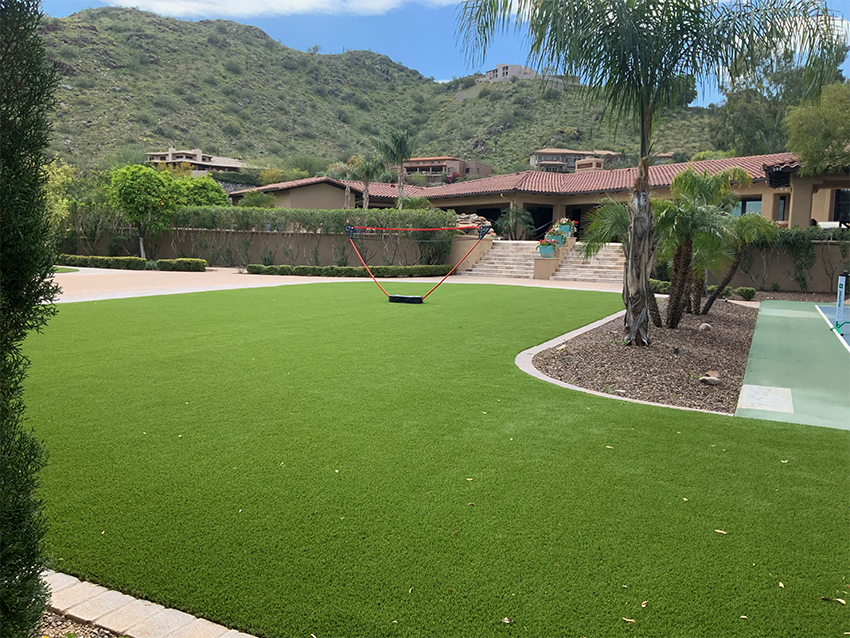
Pet turf Arizona yards need starts with drainage
Pet turf is a surface, not a complete drainage system. Urine, rinse water and rain must pass through the turf and continue through the supporting layers toward an appropriate drainage path. A product described as pet-friendly cannot compensate for a poorly prepared base or a yard that traps water.
Arizona properties vary in soil conditions, slope and existing hardscape. Before installation, have the contractor evaluate where water currently collects, how the base will be prepared and where runoff will go. The plan should address routine rinsing as well as heavier monsoon rainfall without directing water toward the house or neighboring property.
- Identify low spots and existing drainage problems before covering the ground.
- Ask how the turf backing and base will work together to move water.
- Discuss drainage around patios, walls, gates and frequently used dog areas.
- Make sure the finished layout leaves practical access for cleaning and inspection.
Control urine odor at its source
Odor develops when urine residue remains in the turf system. Concentrated use—especially when a dog repeatedly visits one corner—can make that area harder to keep fresh. Heat can make odors more noticeable, while Arizona's long dry stretches mean you cannot rely on rain to rinse the yard.
Good drainage and targeted rinsing work together: water needs a path out rather than a place to collect. If odor persists, use a pet-urine cleaner that is compatible with the installed turf and follow its directions. Ask the installer about any infill or maintenance products being proposed, what they are intended to do and what ongoing care they require.
Do not treat an odor-control product as a substitute for cleanup. Recurring smells after cleaning are a reason to inspect the affected area and drainage, not simply add fragrance.
Build a cleanup routine around your dogs
Artificial turf removes mowing from the routine, not pet-waste maintenance. The right cleaning frequency depends on the number of dogs, how much space they use and whether they favor a small toilet area. A compact dog run generally needs closer attention than a larger yard receiving occasional use.
Keep a hose and cleanup supplies accessible. Follow the turf supplier's maintenance instructions and cleaning-product labels, including dilution, rinsing and when pets may return to the area.
- Pick up solid waste promptly rather than leaving it to dry into the fibers.
- Remove remaining residue gently, then rinse the affected spot.
- Rinse frequently used urine areas regularly and adjust the routine if odors develop.
- Use a compatible pet-urine cleaner when needed; never mix cleaning chemicals.
- Remove leaves, hair and windblown debris with tools approved for the turf.
Plan for hot surfaces, not just a soft feel
Artificial turf can become hot in direct Arizona sun. A soft texture does not mean the surface is comfortable for paws, and selecting turf for extreme heat does not mean it stays cool. Consider when your dogs use the yard and how shade moves across it during the day.
Provide shade, fresh drinking water and access to a cooler resting or toilet area. Schedule play for cooler parts of the day and check the surface before allowing dogs onto it. If it feels hot, keep them off it; a quick hand check is a precaution, not a guarantee of paw safety.
Rinsing may reduce surface heat temporarily, but it is not a dependable all-day cooling strategy. Dogs should always have a way to leave a hot area rather than being confined to sun-exposed turf.
Adjust maintenance for dust and monsoon weather
Windblown dust and debris add to the cleaning load in Phoenix-area yards. Remove loose material before rinsing so it does not accumulate in heavily used areas or around drainage outlets. Check the edges and the dog's preferred toilet spot more often than lightly used corners.
After a monsoon storm, look for standing water, deposited sediment and debris blocking drainage paths. Persistent puddles deserve an inspection rather than repeated surface cleaning. Rain may rinse some exposed areas, but it does not replace waste pickup or targeted urine cleanup, especially under covered patios.
For shared pet areas, assign clear responsibility for waste pickup, cleaning and post-storm inspections. A maintenance plan only helps if someone consistently carries it out.
Compare the installation plan, price and warranties
Artificial Grass Arizona's installed turf starts at $4.99 per square foot. Final pricing depends on site conditions, access, base preparation, drainage, turf grade and project details. For a pet yard, compare estimates based on the proposed drainage approach and maintenance requirements—not just the surface appearance or starting price.
Based in Cave Creek and serving 22 cities across the Phoenix metropolitan area, Artificial Grass Arizona offers USA-made turf selected and tested for Arizona's extreme heat. The turf product carries a 15-year manufacturer warranty. Installation labor carries a separate 2-year workmanship warranty; these are distinct warranties, not a combined coverage term.
Book a free on-site estimate to discuss your dogs' habits, drainage concerns and shade needs. Financing is available.
Quick answers.
- Does pet turf smell when dogs urinate on it?
- It can if urine residue accumulates. Effective drainage, regular rinsing and a compatible pet-urine cleaner help manage odor. Frequently used spots need more attention, especially during hot, dry weather.
- Is artificial turf too hot for dogs in Arizona?
- It can become too hot in direct sun. Check conditions before use, provide shade and a cooler alternative, and keep dogs off hot surfaces. Turf selected for Arizona heat does not necessarily stay cool.
- Will monsoon rain clean a pet-turf yard?
- Not reliably. Rain does not replace solid-waste pickup or targeted urine cleanup, and sheltered spots may receive little water. After storms, check for standing water, sediment and blocked drainage paths.