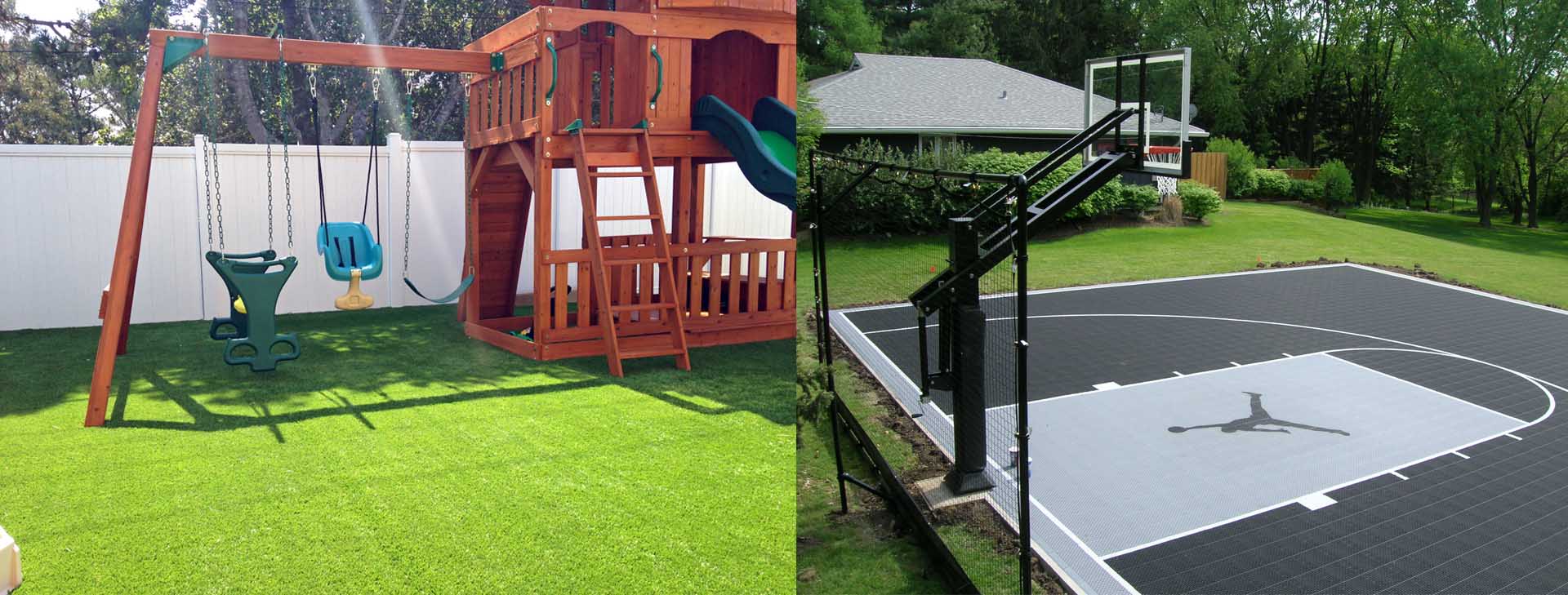
Playground turf and padding: start with the equipment
A lawn used for ground-level play has different needs from an area beneath swings, slides or climbing equipment. Artificial turf alone should not be assumed to provide adequate fall protection. Where falls from equipment are possible, have a qualified playground professional identify the required protective surfacing area and evaluate the system for the equipment’s fall height.
Padding is part of that system, but thickness or softness underfoot does not establish its protective performance. Ask for impact-performance documentation that applies to the proposed assembly, including the turf, pad, infill if used, and supporting base. A result for a different combination is not enough to judge the installation you are considering.
Plan transitions and equipment footings at the same time. Edges, seams and changes in elevation need careful detailing so the finished play area does not introduce avoidable trip hazards. Keep inspection and maintenance requirements with the property’s records.
Drainage needs a route beyond the turf
Water passing through the turf is only the first step. It must also move through or around the padding, into a suitable base, and toward an appropriate drainage destination. Arizona sites with compacted or slow-draining soil need particular attention; a permeable surface does not fix poor drainage underneath.
Before installation, review elevations, roof runoff, nearby hardscape and existing low spots. Monsoon downpours can concentrate water from a much larger area onto a small playground. The plan should avoid routing that runoff through the play area or toward buildings and neighboring properties.
Ask how the pad affects water movement and how any drain inlets will remain accessible for cleaning. Base preparation must support a stable surface while allowing the intended drainage path to function. Persistent puddles after installation deserve investigation rather than an assumption that the turf will eventually dry.
Build cleanliness into the maintenance routine
Playground turf is not maintenance-free. Windblown dust, leaves, food spills and animal waste can collect on the surface. Remove debris regularly and address spills and waste promptly, using methods approved for the turf and the rest of the installed system.
Cleaning and disinfecting are different tasks. If a shared play area needs disinfection, confirm that the product is appropriate for the surface and follow its label, including contact time and any rinsing or re-entry instructions. Do not assume a deodorizer disinfects, or that a cleaner suitable for turf is also suitable for the underlying pad.
Provide convenient access for maintenance without directing rinse water into unwanted areas. During routine cleaning, check for lifted seams, loose edges, uneven areas and displaced infill where applicable. After dust storms or heavy rain, inspect again before reopening a managed play area.
Use November to plan for summer heat
November’s milder Phoenix weather is a useful time to assess a site, but it is not a reliable preview of summer surface conditions. Artificial turf can become hot in direct sun. Material selected for Arizona heat should not be confused with a surface that stays cool or is always comfortable for children.
Plan shade around the hours when children will actually use the space, accounting for seasonal changes in sun angle. Check slides, climbing equipment and other contact surfaces as well as the turf before play. Shoes do not eliminate heat concerns for children who sit, crawl or fall onto the surface.
For managed properties, establish a hot-weather inspection and access policy, with alternative play arrangements when conditions are unsuitable. Watering may cool turf temporarily, but it is not a lasting heat solution and adds water use. Before next summer’s monsoon season, also clear drainage routes and inspect edges and transitions.
Compare complete installation scopes, not just turf prices
A useful proposal separates the visible turf from the preparation and supporting components. Artificial Grass Arizona’s installed turf starts at $4.99 per square foot, but that starting price is not a quote for a complete playground safety system. Final pricing depends on site conditions, access, base preparation, drainage, turf grade and project details.
Artificial Grass Arizona is based in Cave Creek and serves 22 cities across the Phoenix metropolitan area. Its turf is USA-made and selected and tested for Arizona’s extreme heat. The turf product carries a 15-year manufacturer warranty; installation labor carries a separate 2-year workmanship warranty. Neither warranty should be treated as evidence of a playground system’s fall-protection performance.
- Identify the play equipment, fall heights and intended protective surfacing areas.
- Confirm the proposed assembly and the performance documentation relevant to it.
- Request a clear scope for grading, base preparation, padding, drainage and edge transitions.
- Include cleaning access, inspection responsibilities and shade planning in the project discussion.
Turn the site assessment into a practical plan
Bring equipment information, drainage concerns and expected hours of use to the site assessment. For property managers, include the people responsible for cleaning and inspections so the finished space is practical to maintain.
Book a free on-site estimate with Artificial Grass Arizona to discuss your site and installation scope. Financing is available.
Quick answers.
- Does playground turf always need padding?
- Not every ground-level play lawn has the same requirements. Beneath elevated playground equipment, have a qualified professional determine the protective surfacing needed. Turf alone should not be assumed to provide adequate fall protection.
- Will playground turf drain during Arizona monsoons?
- Drainage depends on the whole assembly and the site, not just the turf backing. Padding, base materials, underlying soil, grading and the runoff destination all affect performance during heavy rain.
- Does Arizona-rated turf stay cool enough for summer play?
- Turf selected for Arizona heat can still become hot in direct sun. Plan shade, check surface conditions before use and restrict access when conditions are unsuitable.